It’s no secret that the talent landscape has evolved significantly over the past five years. Those successfully navigating this new reality are developing human capital strategies that acknowledge the changing market and address the moving targets that have come to light.
In our own practice, we’ve seen rising compensation package costs across nearly every function since 2021, with CEO roles jumping about 30%. And while it takes approximately 20% longer to get leaders into place compared to 2021, those hiring have less time than ever to make a decision on candidates.

The talent landscape has changed, so what does that mean for hiring companies? Several key moving targets have come to light, and while the implications of this continues to reveal itself, the following patterns have emerged:
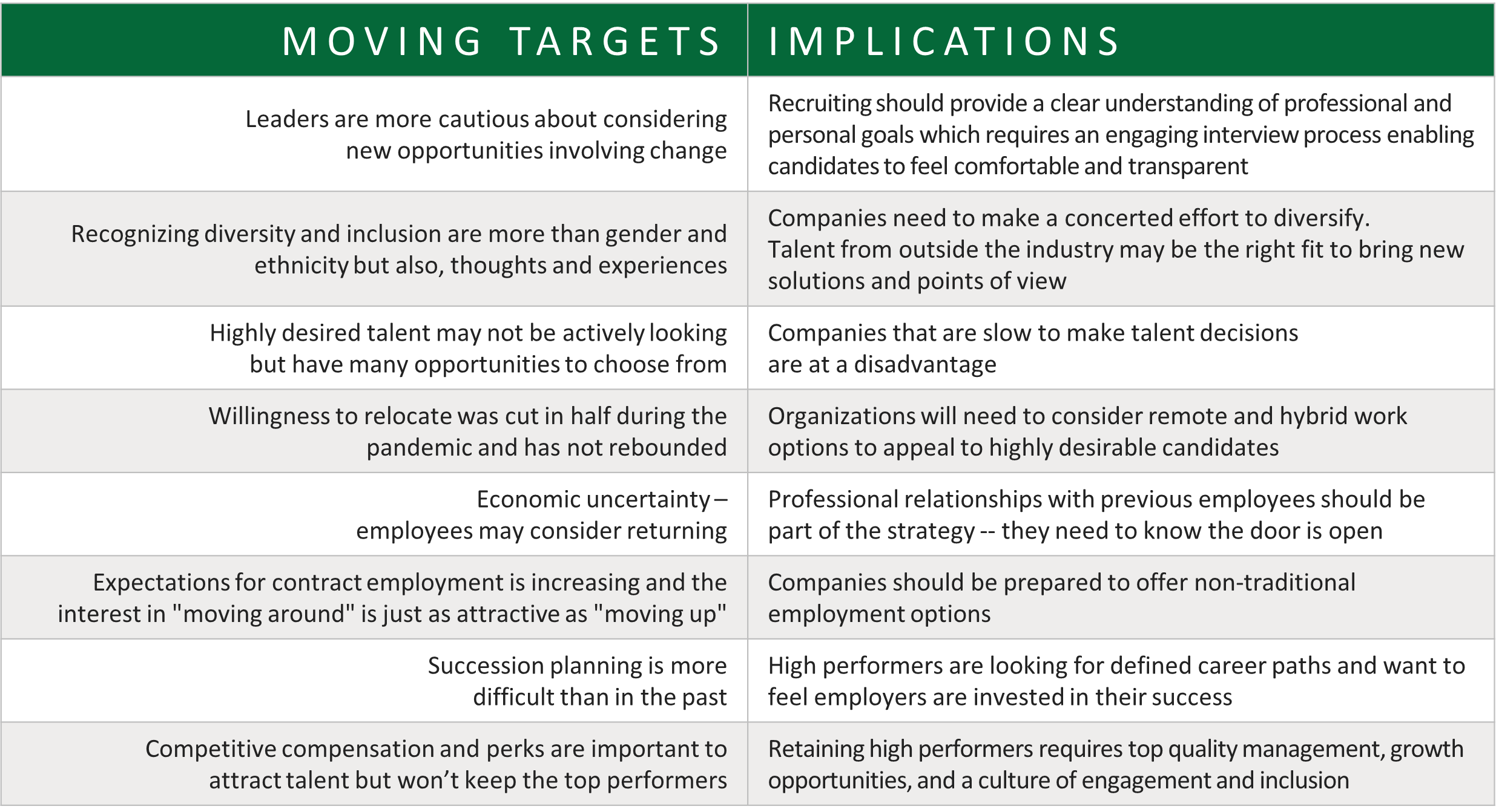
Our conversations with more than 15,000 prospective candidates in 2022 validate that top leaders continue to look at career opportunities from a different lens. Prospective candidates are looking to align with an organization that has a clear purpose and a role that resonates on a deeper level. Prospective candidates are asking tougher questions and observing how hiring teams are making decisions, communicating employee value, and describing opportunities for growth.
Misalignment is a missed opportunity in today’s talent market. The gap between hiring organizations and candidate desires is widening. We continue to advise clients on evaluating the attractiveness of the organization and the position.
We also learn why leaders are leaving. Deloitte’s recent research found 70% of the C-suite are seriously considering quitting for a job that better supports their well-being. Organizations may be missing an opportunity to both attract and retain talent if they don’t address their own leadership, values and culture.

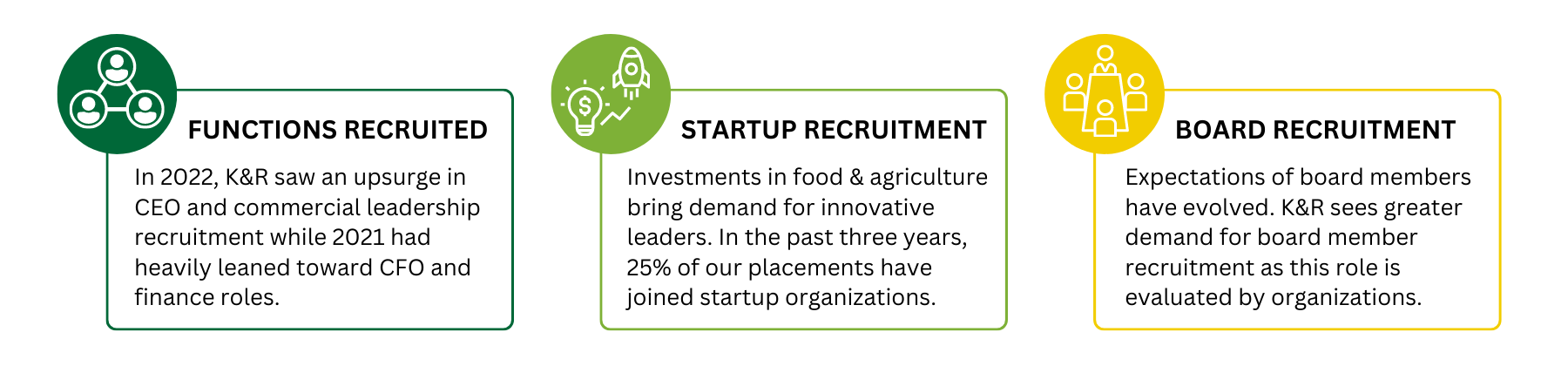
The food and ag industry continues to face a leadership deficit. Tomorrow’s industry leaders, and our 2022 placements, were sourced from around the globe for many executive functions. We placed leaders with small start ups to large, mature firms, not-for-profit, and for-profit organizations.
For more human capital insights, contact us to schedule a time to discuss.
Kincannon & Reed incorporates validated interview techniques and evaluation tools to accurately assess candidates. We have the capability to measure personality traits, motivations and evaluate specific competencies and behaviors. The right assessments provide a balanced approach to understanding potential as much as experience.
Coaching empowers executives to reach their full potential faster, benefiting your organization. We partner certified coaches with executives and use a strengths-based approach to guide leaders through a process that maximizes their potential to drive success.
We bring a history of success delivering advisory and fiduciary board members specifically for family, start-up, and growth organizations. Our industry networks and broad access to executive leadership bring willing candidates from every corner of the market to serve on your board.